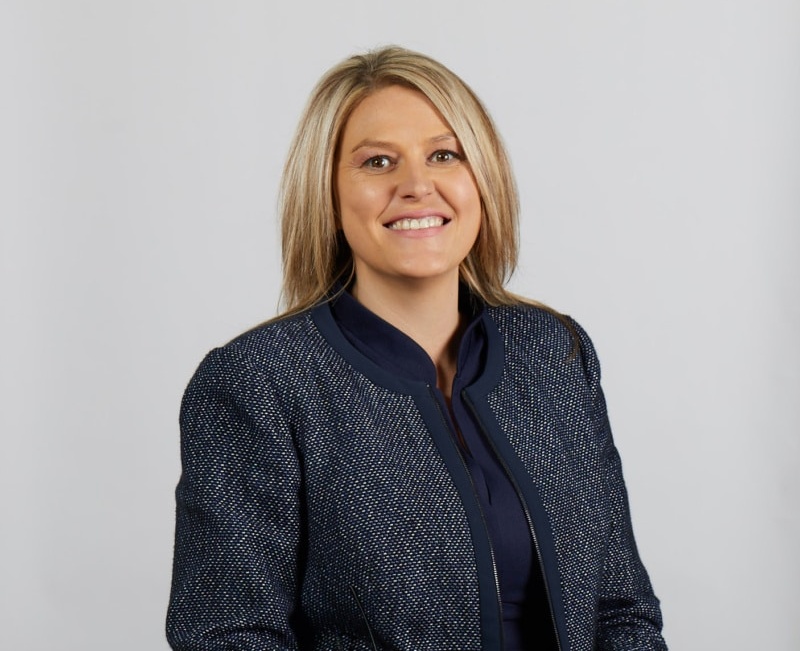
Emily Rees, Chief Financial and Information Officer of Cyberfort, on why saying yes to stepping out of your comfort zone can be the best career decision you will ever make.
Emily Rees always knew she wanted to be a CFO. But when a head of finance role landed on her desk covering not just finance, but HR and payroll as well, she nearly talked herself out of it. The position required statutory accounting expertise she had never developed. It was also in a much smaller business. The imposter syndrome hit hard.
“I suffered hugely before starting that role with the typical imposter syndrome, thinking I’ve signed myself up for something and I’m going to fail at the first gate. I’m not a technical accountant.”
She took the plunge anyway, a decision that would prove pivotal in shaping her path to CFO.
Two Routes to Finance
Rees began her career on the Tesco finance graduate programme, taking what she describes as one of two primary routes into finance.
“One is you start in audit and then you eventually take the plunge into industry, or you do what I did, which is you go straight into industry and you qualify whilst you’re already supporting a business.”
The programme gave her a strong grounding in finance as a business partner. “The Tesco finance graduate programme was a fantastic opportunity to get up to speed whilst learning at the same time.”
Her early trajectory pointed towards becoming a generalist FP&A manager in larger retail and hospitality businesses. Then came the head of finance role that intimidated her.
“Whilst it was certainly a learning journey, I gained so much experience and knowledge in that role, not just about technical finance, but about the wider operational model of the business and how it all comes together.”
That broader perspective proved critical. “Without that role, I wouldn’t be where I am today in terms of the trajectory that took me to CFO.”
The Right Steps at the Right Time
Asked whether she would do anything differently, Rees pauses. In hindsight, she would not.
She has made mistakes, but sees them as part of the journey. What matters is focusing on what you can influence, learning from errors and moving forward rather than dwelling on them.
“That’s part of the journey. It’s important to focus on your sphere of influence when you make mistakes, rather than beating yourself up, which I think women, particularly women in leadership, suffer from a lot.”
There have been moments of doubt, but looking back, she would not change her decisions.
Moving Beyond the Scorekeeper
For aspiring CFOs, Rees highlights strategic financial leadership as the defining capability for the ever-evolving role.
“The modern CFO is a co-pilot with the CEO. You’re no longer just the numbers expert. You need to be able to translate financial insights into what they mean for the business and what you are going to do with them.”
This means shaping strategy, influencing long-term planning and growth, and challenging boards with evidence-based insight. “We’re not just the scorekeeper anymore. You’re there driving the strategy with the CEO.”
For women, establishing authority often requires extra focus. “Women in finance face higher scrutiny. You need a very clear communication strategy, confidence in high-stakes discussions, and the ability to influence senior executives and non-executives at board level.”
Stakeholder management is central to this, as is positioning finance as a driver of innovation rather than a back-office function.
“CFOs increasingly cover digital transformation, ERP implementation and technology, including how AI can transform forecasting and finance functions. There’s continuous learning in the role.”
Commercial acumen is equally essential. “You need to understand how the business operates end to end. Women who build cross-functional experience tend to accelerate faster.”
Finding Your Voice
One of Rees’s biggest challenges was establishing authority under heightened scrutiny. As a natural introvert, she often found herself talked over in senior meetings.
“I realised I was being talked over, especially with more extrovert members of boards. You end up being shoehorned into just being the numbers expert. I was being interrupted, questioned and underestimated.”
Recognising the pattern, she focused on developing her communication approach and confidence with stakeholders. The aim was to demonstrate that she brought more than number validation.
“It took a lot of trial and error. Books can give you tools, but it really comes from doing, from understanding what your unique voice is and how to make it heard at the table.”
The Power of Mentorship
Before becoming involved with Potentia, Rees was not part of any formal networks. Instead, she built informal mentoring relationships with senior women she had worked with.
“I would raise my concerns, we’d talk it through over lunch, and it gave me the confidence to push forward with my ideas.”
She was proactive in asking for support and maintained strong relationships with former colleagues, using them as sounding boards when facing challenges in new roles.
The Calendar Management Challenge
Rees is candid about work-life balance. “I do not always get it right.”
With a two-year-old daughter and a husband who is also a CFO, life is a constant exercise in calendar, childcare and health management. Nursery calls can derail even the best-laid plans.
She references Lean In by Sheryl Sandberg and its acknowledgement that women cannot have it all at once. “I recognise that I won’t always be the mum at nursery pick-up. But I hope my career inspires my daughter to strive for her best.”
A supportive partner is critical. “We are both main earners and main parents. It’s a shared responsibility and we flex around each other as priorities change.”
Three Key Pieces of Advice
Rees distils her guidance into three points.
First, take opportunities even if you do not feel ready. “Take the leap outside your comfort zone. You learn on the job. You don’t need to know everything before you start.”
Second, recognise there are multiple routes to the top. “There isn’t one set path. I certainly didn’t tick every box. Take the path that moves you forward, even if it isn’t stereotypical.”
Third, do not let family planning stall your ambitions. “Women often overthink this. Don’t stop yourself from taking roles because of fears about what others might be thinking, just have the confidence to press forward.”
The Future: From Cost Controller to Value Creator
Looking ahead, Rees sees the CFO role continuing to expand. CFOs now oversee broader risks including cybersecurity, regulation and data protection.
“As a CFO, I own the risk register. I need to understand all of those risks and balance them with what’s right for the business.”
Real-time insight will replace backward-looking reporting. “With AI and automation, we’re on the cusp of a real shift. It won’t be about discussing last month’s numbers in a board meeting.”
This creates space for CFOs to focus on value creation. “AI gives us the bandwidth to move beyond cost control and drive real value.”
Women Shaping Finance Leadership
Rees sees a significant opportunity for women to shape the future of finance through ethical leadership.
“As a CFO, you operate as the conscience of the organisation. Research shows women often excel in this space, with a strong alignment to ethical leadership.”
Women can lead on ESG, sustainability and governance, while influencing long-term value through more inclusive leadership cultures.
Her vision is clear. More women in finance leadership will lead to more women on boards, strengthening strategy and reshaping how businesses are run.
Key Takeaways for Your CFO Playbook
- Say yes before you feel ready: Stepping outside your technical comfort zone builds the breadth of experience that supports progression to CFO.
- Build authority beyond the numbers: The modern CFO translates financial insight into strategy and partners with the CEO as a genuine co-pilot in the boardroom.
- Find your voice: Deliberate communication and visible confidence prevent you from being confined to a scorekeeper role.
- Seek cross-functional exposure: Experience across HR, technology, operations and risk strengthens commercial judgement and strategic impact.
- Keep learning and adapting: Mistakes and imperfect balance are part of the journey; sustained influence comes from resilience and continuous development.
- Don’t let fear dictate personal decisions: Concerns about professional image should not prevent you from pursuing family plans alongside leadership ambition.