
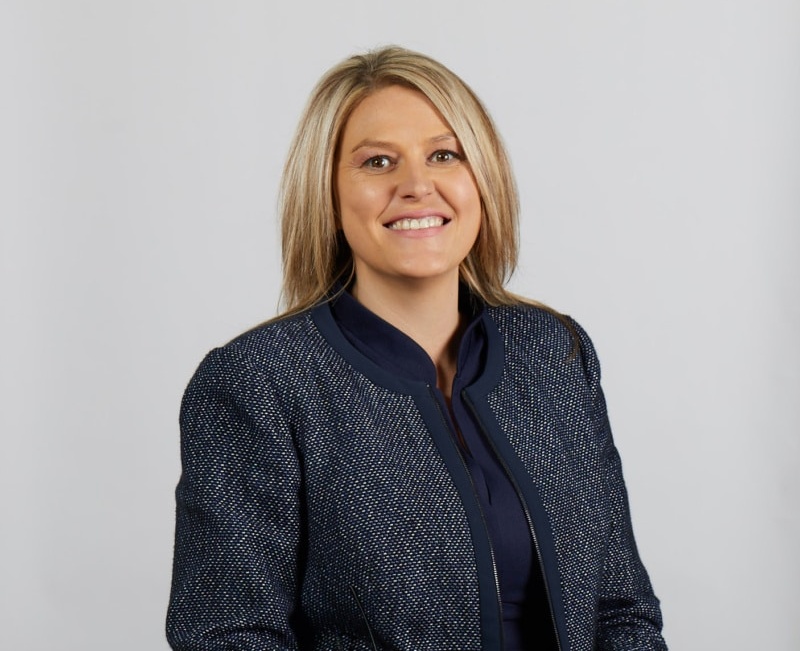
Alice Arnold, Chief Financial and People Officer at Dune London, on why taking a year out at 32 was the best career decision she ever made
Alice knew she wanted to be a CFO when she left audit for industry. What she didn’t have was a strategy beyond working hard and seeing where she ended up. Fifteen years into her tenure at footwear retailer The Dune Group, where she now serves as CFO, Arnold’s journey reveals how sometimes the most pivotal career moves involve stepping away rather than climbing up.
The Gap Year
Arnold’s path to the C-suite took an unexpected turn in her early thirties. After progressing quickly through three roles at Dixon’s over six years, she found herself questioning whether her path to CFO would benefit from a different experience.
“I’d been doing very nicely at Dixon’s. I’d had great progression, but I just wasn’t sure that the culture of a massive PLC at that point in my career was right for me as an individual to really deliver on my potential.”
Her solution was unconventional: she took a gap year. Travelling from top to bottom of Africa, doing safari, climbing mountains and gaining perspective, Alice used the time to reflect deeply on what she wanted from her career.
“That year out was absolutely pivotal for me. It reinforced my ambition to reach the top of my profession, and I also came to the realisation that a smaller business where I could really make a mark and get a broader experience would be really exciting.”
The timing aligned with personal circumstances as well. Fresh out of a relationship, Alice recognised a window of opportunity. “When am I going to have the chance to do something like this again? I knew it would be a great experience, so I didn’t have a second of regret about it.”
Finding the Right Fit at Dune
When Alice returned and the Dune opportunity arose, everything clicked. The business was the right size, the sector was interesting, and she owned a pair of Dune shoes (admittedly one of only five pairs she owned at the time).
“I thought, yeah, let’s give this a go. And basically I loved Dune from day one.”
Alice joined as financial controller but what made the role transformational was her boss, James Cox, who would mentor her for the next decade as he progressed from FD to CFO to CEO and promoted her in his wake.
“He was my boss for actually 10 years. As he progressed up the company, I progressed behind him. I learned a huge amount from him every day really, and he really championed me.”
She progressed through head of finance and director to CFO, gaining experience leading non-finance teams including legal, the distribution centre, logistics, and now HR. The business transformed dramatically over her 15 years, presenting both opportunities and challenges, including navigating a CVA process during COVID.
“The business has ended up coming out stronger because of some of the key decisions we took around that time.”
Core Competencies for Success
When it comes to essential skills for aspiring CFOs, Alice doesn’t differentiate between genders. Leadership skills top her list. “You’re only as good as your team. If you recruit and retain great people who are also passionate about the business and work hard, that’s half the battle.”
Communication and relationship building matter enormously, both throughout the business and with external partners. Then there’s commercial judgement and leading the strategic agenda.
“Having confidence in your opinions and putting yourself in the centre of decision making. Sometimes women can have that self-doubt or lack that confidence.”
She is careful about generalising, noting she’s worked with men who have fantastic emotional intelligence and women who lack it. “But I do think there can be a tendency for women, for whatever reason, to not believe in themselves.”
Her advice is straightforward: “You’ve got to ignore that voice at the back of your head, believe in yourself, reflect on the achievements you have delivered and remind yourself that you are really capable.”
Gender in the Workplace
Alice acknowledges that her perspective may be shaped by working at Dune, a business dominated by successful women, for 15 years. “I haven’t really ever felt a barrier to progress. Maybe I would have a different outlook on this if I had spent a large part of my career in a very masculine business.”
She hasn’t experienced challenges specifically due to being a woman, though she hasn’t been immune to imposter syndrome. What made the difference was having bosses who championed her, though she emphasises you must earn that support by doing your best every day.
On the challenge of juggling children and career, which Alice hasn’t faced personally, she notes that many women in her business have managed it extremely well. “It’s not always about putting in the hours, it’s about being effective with your time.”
Support Networks and Mentorship
Alice maintains a network of CFOs in similar consumer industries who meet regularly and share a WhatsApp group for bouncing questions around. “It’s a mixed gender group but dominated actually by women and we are very supportive of each other. Sometimes having an external view really helps.”
Her most important mentor remains James Cox, now a non-executive director at Dune, whom she consults regularly on ideas and opportunities.
Balance Through Compartmentalisation
Alice is disciplined about protecting her personal time. Unless there’s a major crisis, her evenings and weekends are her own.
“For me I think it’s vital to go into work each day feeling I’ve had a chance to recharge and then I’m able to give everything to work and I can be more efficient.”
Her recharging activities include playing tennis, padel and football, walking her dog, watching “trash TV”, learning to crochet, and studying French. “All of these things revitalise me and then I’m ready for the work day.”
The Power of Saying Yes
Alice’s advice for aspiring CFOs centres on pushing beyond comfort zones. Throughout her career, she’s been offered opportunities to lead areas outside her specialty, like the distribution centre or logistics.
“Those are not my areas of speciality, but I just said yes, just say yes, give it a go. And actually, you will find that you can really add value in areas that you never realised you could.”
Her broader guidance is equally direct: “Work hard, put your heart and soul into it. Take ownership of everything you do and what your team does. Own your mistakes. Don’t listen to any self-doubt and be confident in your abilities.”
Environment matters too. “Make sure the business that you’re working in is somewhere where the culture fits, you’ve got good people around it, you enjoy going into work each day. If you haven’t got it where you are, the world’s a big place.“
The Evolving CFO Role
The CFO role has transformed into something highly commercial and strategic. “Yes, you need to make sure that your financial disciplines are strong. But really the role of the CFO is highly strategic. It’s all about decision making and working right across the different business functions. We shape strategy, we drive growth.”
Alice sees both opportunities and challenges ahead. AI may eliminate some lower-level roles, raising questions about how people will develop strategic skills. New risks constantly emerge, with cyber security being the most topical. “CFOs have to be proactive in identifying those risks and finding mitigations.”
The essential skills for the next decade? “Cutting through that data, analytical skills to make the right decisions. Sound judgement and the communication skills and leadership skills are going to be absolutely essential.”
Shaping the Future
Alice sees significant opportunities for women to shape finance leadership, particularly through emotional intelligence. “Sometimes it comes more naturally to us ladies. It gives us an opportunity to improve communication, team dynamics, conflict resolution.”
Her message to women aspiring to senior finance roles is unequivocal: “There’s no reason why we can’t have more and more women at the top of businesses. If you want it, you just have to make it happen for yourself.”
Key Takeaways for your CFO Playbook
-
Compartmentalisation: protect your time and energy outside work to sustain high-quality decision-making and leadership performance.
-
Give yourself space to evaluate your path: periodically step back from career momentum to intentionally reassess direction, goals, and gaps.
-
Seeking mentorship: build relationships with leaders who both advise and actively advocate for your progression.
-
Stepping away can accelerate progress: strategic breaks can provide clarity and reposition you for faster long-term advancement.
-
Choose environments and leaders carefully: finding the right cultural fit and having a boss who actively champions your progression can streamline your rise to CFO.
-
CFO readiness is about leadership, not just finance: success comes from building strong teams, communicating well, and confidently placing yourself at the centre of strategic decision-making.
-
Say yes to stretch opportunities: leading non-finance functions expands your commercial judgement and strategic impact beyond the technical comfort zone.
-
Confidence and self-belief matter: ignoring self-doubt, owning achievements, and seeking mentorship and peer networks are essential to sustaining progression to the top.
Related insights
View all
The CFO Playbook: Becky Hall on her Path to CFO, and Why Comfort Zones are Meant to be Left Behind

The CFO Playbook: Emily Rees on Finding Your Voice and Redefining the Scorekeeper
Introducing Ciara Allan: CFO of Arc Inspirations