The CFO Playbook: Rebecca Rajeswaran on Earning Your Seat, the Mother Penalty, and Why the Role Isn’t as Bad as It Looks
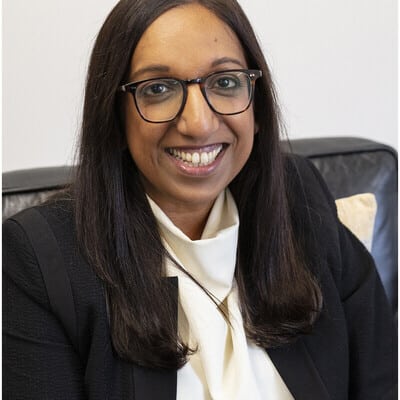
Rebecca Rajeswaran, Group CFO at KellyDeli, on how people shape careers more than plans, and why women need to embrace their hard-earned seat around the table.
Rebecca never had a eureka moment on her path to becoming a CFO. If you’d asked her years ago where she saw herself going, she’d have probably told you she hadn’t given it all that much thought. She was just keen to keep learning and take on new challenges as they came.
“Back then, the idea of being CFO was pretty intimidating – it seemed like a massive leap and, to be frank, I wasn’t sure I even wanted it.”
What made the difference wasn’t a grand plan but the people around her. “I’ve been lucky to work with fantastic teams and great companies, and it’s the people who have shaped my career more than anything else. You learn so much just by being alongside others who are brilliant at what they do.”
The Right Advice at the Right Time
Professional development has played a huge part in Rebecca’s journey, and her time at Marks & Spencer stands out as particularly pivotal. A coach there gave her a piece of advice she’ll never forget.
“She told me I’d earned my seat at the table and needed to own it. That message was a real confidence boost. To this day I always think that I deserve my seat at whatever table I’m around.”
That shift in mindset proved transformative. It wasn’t about proving she deserved to be there anymore because she’d already earned it. The challenge was simply owning that reality.
The Role She Wasn’t Sure About
Another defining moment came when a manager suggested Rebecca take on a group reporting role, completely different from her usual commercial positions. She wasn’t sure at first if the new role would suit her, or if she’d enjoy it as much.
“My manager told me that if I ever wanted to take on the CFO role, I needed to widen my experience. That encouragement made a big difference.”
The opportunity was at a FTSE 100 company, which felt huge. She also spoke to a few head-hunters, and every one of them said she should go for it.
“It turned out to be a smart move for my career. Was it my favourite job ever? Not really – but it did give me new technical skills that have proved invaluable in my CFO roles.”
That willingness to take on a role that didn’t immediately excite her, to invest in broadening her skill set even when it meant stepping away from what she loved, proved instrumental. Not every career move needs to be your dream job to be the right move.
Looking back, Rebecca wouldn’t change anything about her career progression. “I’ve landed some amazing roles and worked with incredible people along the way. Sure, there have been tough moments and setbacks, but each one helped me grow both personally and professionally—they’ve really shaped who I am and what I’ve achieved.”
The Mother Penalty
One of Rebecca’s biggest challenges as a woman in finance has been facing assumptions about her capabilities because she’s a mother. The assumption that motherhood compromises professional competence remains frustratingly common, even if rarely articulated directly.
Rebecca recalls one interview in particular which it was articulated very directly indeed. The business owner, herself a mother, questioned whether Rebecca could handle the job due to having children.
“I replied simply that I never apply for roles I can’t commit to.”
Rebecca notes that this kind of judgement is common, even if rarely spoken aloud. Her response earlier in her career was to manage the perception by controlling the narrative.
“Earlier in my career, I often avoided discussing my family so people would forget about my role as a mother.”
Now that she’s established in her position and company, she feels comfortable talking about her kids openly. “My colleagues know I’m capable and committed, so any preconceived notions about my performance no longer come into play.”
That shift from hiding a fundamental part of her identity to being open about it highlights an unfair burden: women having to prove their commitment and capability in ways their male colleagues simply don’t face, particularly when they become parents.
The Childcare Equation
Rebecca is frank about work life balance. “It’s not easy! And if I’m being honest I probably don’t always get it right.”
She acknowledges being very lucky in her domestic arrangements. “I am very lucky in that my husband picks up ALL of the childcare responsibilities, so I can focus on work without worrying about pick-ups or schedule conflicts. This flexibility is helpful when meetings run late or extra sessions are needed.”
That honesty matters. The conversation around work life balance for women often ignores the crucial role that domestic support plays in making demanding careers possible. Rebecca’s ability to focus on work without worrying about childcare logistics depends directly on her husband shouldering those responsibilities.
When work is quieter, which she admits is pretty rare, she tries to reclaim some time. “I try and take back a little time to do those school drop offs/pick ups, finish slightly earlier and spend time with the kids or even a bit of time for myself to go and meet friends for a drink.”
The Power of Networks
Support networks have been essential throughout Rebecca’s journey. “I would be lost without my various support networks,” she reflects. She’s kept in touch with many of the amazing people she’s worked with over the years, including old bosses and peers.
One network stands out particularly. “I have one WhatsApp group called ‘Amazing Ladies’ that I lean on regularly for work advice & life advice.”
During her time at M&S, working within a large organisation provided additional opportunities. “One notable advantage of working within a large organisation was my involvement in the women’s network. This participation provided the opportunity to join the 30% Club, where I served as a mentor.”
Mentoring several individuals over the years proved highly rewarding, but it also offered unexpected benefits. “Moreover, the experience also enabled me to gain valuable insights through reverse mentoring, offering a deeper understanding of their perspectives across various organisations.”
Critical Competencies
When it comes to essential skills for aspiring CFOs, Rebecca emphasises several key areas. “Resilience matters for every CFO, no matter your gender—the job isn’t easy.”
Having a strong network, both inside and outside your company, makes a significant difference because nobody knows everything. Having people you can reach out to when facing unfamiliar challenges becomes invaluable.
The CFO role also demands being what Rebecca calls “a master multitasker.” She explains: “The CFO role demands exceptional multitasking skills. You’ll regularly handle several pressing priorities each day and week, making multitasking an essential part of the job.”
Finally, effective delegation is crucial. “Accept that you can’t do everything alone and build a team you trust to take on tasks.”
Not as Bad as It Looks
When asked to provide advice for women aspiring to become CFOs, Rebecca is quick to open with “It’s not as bad as it looks!”
The role offers genuine rewards. “You get to see the business from end to end which is a huge privilege.”
Her guidance focuses on three key areas. First, develop a wide skill set throughout your career, including the less exciting areas. Those technical skills gained in roles you don’t particularly enjoy can prove invaluable later.
Second, create a network as you progress that you can turn to when you reach the CFO role. Those relationships become lifelines when navigating unfamiliar challenges.
And third, “Join Potentia!”
Embracing AI
Looking ahead, Rebecca sees AI as both an opportunity and a challenge that CFOs must actively engage with. “We need to embrace AI and unlock it’s potential, to me it’s all still quite theoretical but I’m pushing myself to learn new skills and different ways of working.”
What excites her most isn’t the technology itself but what it might enable. “I’m quite excited about the prospect of AI taking away the routine tasks and leaving me more time to mentor, coach, think about strategy and move my business forward.”
Finding Your Voice
When it comes to opportunities for women to shape the future of finance leadership, Rebecca’s message is clear and emphatic.
“I think we need to have a stronger voice and not be afraid to speak up, we need to put ourselves forward for those big jobs and rightly pull up our seat at the big table.”
Reflections
Rebecca’s path to CFO was not defined by a single breakthrough moment or a rigid career plan but rather by the people she worked with, the opportunities she chose to take even when they felt uncertain, and the confidence she gradually learned to back herself.
Her experience is a reminder that progression to CFO rarely follows a perfectly mapped route. It is built through broad experience, strong relationships and the willingness to step forward when the opportunity arises.
And perhaps most importantly, as Rebecca puts it, it starts with believing you have earned your place at the table and having the confidence to take your seat.
Key Takeaways for Your CFO Playbook
- Own your seat at the table: If you have earned your place in the room, stop questioning it. Confidence and conviction are essential to influencing decisions at senior level.
- Take the role that builds the skills you lack: Career defining experience can come from positions that are not your first choice but broaden your technical or operational capability.
- Seek mentorship: Mentors, managers and strong teams can help accelerate your development and open doors that a career plan cannot.
- Build a network before you need it: Trusted peers and advisers become invaluable when navigating unfamiliar situations in a CFO role.
- Master the art of delegation: The scale of the CFO remit requires strong teams and the willingness to trust others with responsibility.
- Develop resilience early: The role carries pressure, competing priorities and constant scrutiny, so the ability to recover and keep perspective is critical.
- Speak up and pursue the big roles: Women in particular should not hesitate to put themselves forward and contribute their voice at senior tables.
- Acknowledge the realities of support at home: Demanding leadership roles often rely on strong domestic support systems and honest conversations about responsibilities.
- Embrace technology and new ways of working: AI and automation will increasingly remove routine tasks, creating more space for strategic thinking and leadership.
Related insights
View all
The CFO Playbook: Kate Vacovec on Authentic Leadership and Femininity as a Superpower
The CFO Playbook: Anita Kravos on The Modern CFO Path and Why It’s Not Just About Numbers

The CFO Playbook: Alice Arnold on Gap Years and Building a Career at Dune