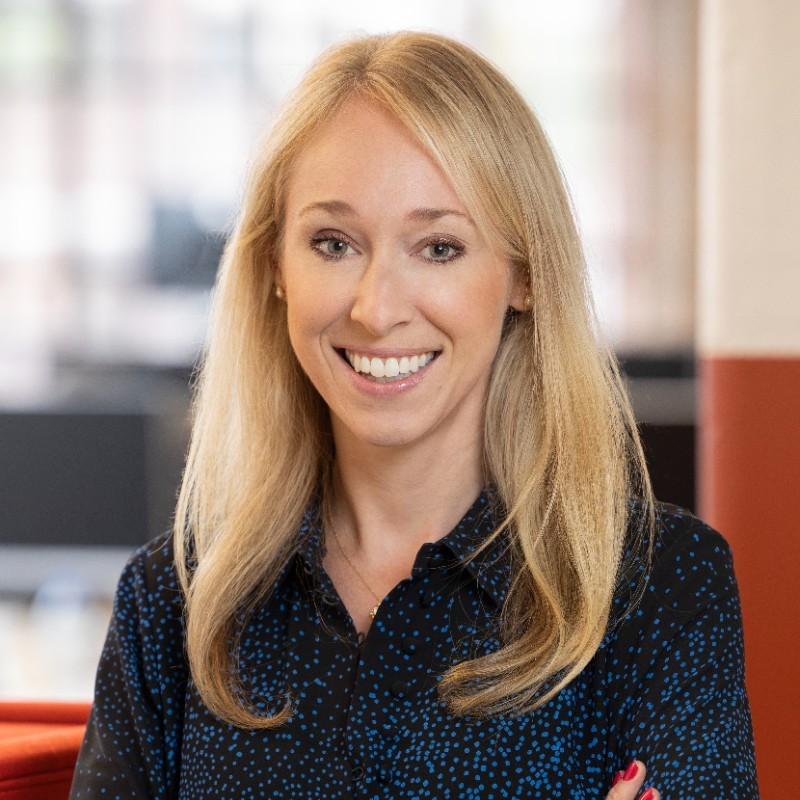
The CFO Playbook: Anita Kravos on The Modern CFO Path and Why It’s Not Just About Numbers
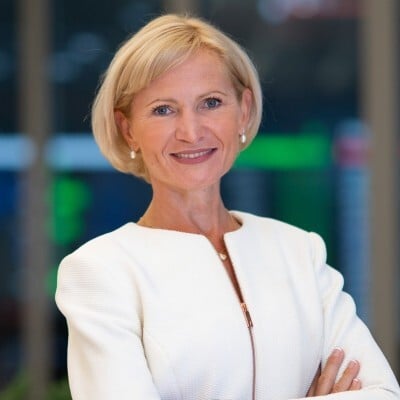
Anita Kravos, CFO (Markets and Risk Intelligence) at London Stock Exchange Group, on why leaving comfort zones matters more than chasing titles, looking beyond the numbers, and how women can move from participation to power
Anita’s path to CFO is less about ambition for the role and more about the discipline of becoming ready for it. Over a 16-year career at GE Capital, she developed financial discipline, operational rigour and high performance standards, alongside the ability to think beyond the numbers and understand how finance drives real business decisions.
“My journey to becoming a CFO was built on curiosity, openness and a willingness to stretch beyond my comfort zone. I took challenging assignments and followed a simple rule to say yes to hard things. I focused on learning in each role, seeking feedback and building a strong toolkit for decision-making. I wasn’t chasing titles, I was building core competencies across technical, operational and cross-functional areas. Over time, this sharpened my strategic thinking, strengthened my commercial perspective and helped me translate insight into real value.”
After 16 years at GE Capital, a pivotal moment arrived.“I realised I had become very comfortable. I was performing well, but had to ask myself whether I was still stretching or holding myself back. Leaving GE was not an easy decision. It meant stepping away from a strong internal network, business, culture and system I understood well. But to grow further, I needed exposure to new industries, cultures and leadership styles.”
She moved into a CFO role in global payments covering EMEA and ANZ, and later into a broader CFO role in global wholesale banking across 36 countries.“Each move accelerated my growth, sharpened my ability to adapt quickly, and improved my judgement, communication and resilience. I navigated cultural shifts from American to Dutch environment, operated in complex matrix organisations, and developed a strong understanding of investor and analyst perspectives, shaping financial narratives that aligned business performance with market expectations. In a short period of time, I felt equipped with a far more advanced leadership toolkit.”
“I enjoyed the breadth of learning before the title. I’ve chosen discomfort over stability, enterprise thinking over functional expertise, and built soft alongside technical skills. Becoming a CFO wasn’t a promotion. It was a natural growth into broader responsibility.”
Looking back, would you do anything differently?
“Overall, I wouldn’t change the roles I took. Each stretched me at a different level and leadership coaching helped me recognize early that the technical expertise alone doesn’t make an effective CFO.”
“What I underestimated back in early years was the strategic importance of talent decisions. The finance function is not just a reporting engine, it’s an institutional capability and it is built deliberately. The ambition of your finance function is a direct reflection of who you hire, promote and tolerate.”
“If you hire strong operators who focus on keeping the machine running, finance remains operational. Efficient, but reactive. If you hire strategic thinkers who understand the business model and challenge assumptions, finance shapes decisions. The shift from reporting performance to shaping performance starts with talent decisions and it is CFO who needs to build strong complementary set of skills in the team that can deliver across execution, insight and partnership. The quality of your team ultimately determines the quality of your impact. Looking back, I would prioritise it from day one.”
What are the critical competencies women should develop to succeed as CFOs?
“At the CFO level, the core competencies are the same for everyone, financial literacy, capital allocation, risk management, enterprise thinking, influencing… all these must be mastered. Credibility starts here. But as we know, this is not sufficient to be successful.”
“Women aspiring to CFO roles need to deliberately build additional capabilities. First, risk taking. I met many very capable female talents waiting for someone to give them opportunity. They wait until they feel fully ready before stepping into bigger roles. Senior leadership rarely comes with perfect readiness. You grow into it. Taking stretch assignments accelerates development.”
“Second, confidence and self-advocacy are critical. Men often step forward into new opportunities knowing there will be challenges along the way and women should feel equally empowered to do the same. It is important to articulate career aspirations and ensure your contributions are visible at the executive level. Women also need to build networks of supporters and advocates who can champion their work.”
“Third, executive presence and influence. CFOs operate in high stakes environments, with boards, regulators, investors. In executive meetings, confidence beats data perfection. It is important to articulate a point of view, stand behind it and own the floor.”
“There is also something that most women naturally bring along, trust and collaborative leadership. Once combined with decisiveness and strategic clarity it becomes a strong differentiator.”
What unique challenges have you faced as a woman in finance?
“The CFO role is demanding by design, the responsibility doesn’t switch off. What adds complexity for women is not the workload, it’s the lens.”
“At times, I felt I had to operate at a consistently higher proof point. Behaviours considered confident in male colleagues can be judged differently when displayed by women. While there were no real barriers, there were unspoken assumptions, so I responded by doubling down – more effort, more visibility, more discipline. Over time, I learnt to focus on competencies and consistency in results rather than recalibrating constantly. Only with more successful female CFO role models can we break unconscious biases, cultural hurdles and inaccurate stereotypes.”
What support networks were most helpful to you?
“I was fortunate that at GE Capital the Women’s Network was well established and practical, offering mentoring, peer exchange and development. Later in my career, informal mentorship became equally important. I sought advice from senior female leaders whose perspectives helped me anticipate new dynamics and build confidence.”
“I also found executive coaching invaluable. I worked with female coaches who understood the nuances women often face in senior roles and helped me refine leadership, influence and prioritisation. Coaches provided self-awareness and helped refine leadership, influence and prioritisation. Mentors share experience, coaches build insight, but ultimately it is the individual’s responsibility to embrace change and continuously improve.”
How do you manage work-life balance?
“CFO diaries are unpredictable and balance is rarely perfect. Over time I developed a routine that works for me, outsourcing what I can and deliberately allocating time for work, family and exercise, critical to stay productive and energised.”
“When my children were young, hiring a live-in nanny was one of the best decisions I made. It reduced daily stress, created stability for my family and gave my children a secure, nurturing environment while I pursued my professional responsibilities. Having the right support made a significant difference and made my career choices easier.”
“I’ve learned to embrace flexibility. Priorities shift and some days require more focus in one area than another. The key is making choices consciously rather than reacting to every demand. It’s not about perfection; it’s about spending energy and being present where you think is most important.”
What advice would you give to women aspiring to become CFOs?
“Becoming a CFO doesn’t have a prescribed path. Every journey is different. But if I had to highlight top 3 priorities, these would be:
1. Believe in yourself and stretch intentionally. Be clear about what you want. Take roles that challenge you even if they feel beyond your comfort zone. Growth rarely comes from staying where you already feel confident.
2. Master the fundamentals, then think like an owner. Technical excellence is non-negotiable. Build a strong financial foundation but move beyond the numbers. Understand the business model, the external environment and how to drive value. Move from managing budgets to shaping performance. It’s transformation you need to manage deliberately, meaning letting details go. Control what you need for decision making.
3. Executive presence and confidence. Many female CFOs are playing the wrong game. They master the numbers and packaging perfection but underestimate the importance of influence in the boardroom. Gravitas in the room and sharing perspective is key to earn trust and respect. Technical credibility earns you a seat at the table, but influence, confidence and perspective are what keep you there.”
“Be deliberate in your growth, bold in your choices and consistent in your delivery. The title follows consistency in results and impact.”
How is the CFO role evolving?
“The CFO role continues to evolve. With access to powerful data and analytics, the CFO is acting as a chief value officer, co-piloting the CEO in decisions that create long-term value. The evolution of AI and digital technology adds another responsibility, digital fluency. CFOs will connect technology investment to measurable outcomes, ensure responsible AI governance and use data for better decisions.
The next decade will redefine the role entirely, moving from ‘bean counting’ to leading digital and cultural transformation, guiding AI adoption and re-inventing business model. Technical excellence remains the foundation. Strategic and digital leadership will define the edge.”
What opportunities do you see for women to shape the future of finance leadership?
“Diverse leadership makes finance stronger. It benefits the whole industry. However, research published by IMD in its Women in Boards White paper (2026) shows that since 2022, the proportion of women hired into senior roles globally has fallen to 33%, reversing much of the progress of the past five years.”
“At the same time, the CFO role is being fundamentally reshaped by digital transformation, AI, geopolitical volatility and stakeholder scrutiny. This creates a clear opportunity for women to lead decisively. Shaping the future of finance requires change in the approach: from participation to power, from perspective to a decisive impact.”
Women can make a difference where it matters most through redefining leadership culture, leading digital and AI transformation with judgement, driving credible ESG frameworks and opening doors for the next generation.
“One of the most powerful things we can do is sponsor and mentor other women. I have seen how one advocate can change the trajectory of a career. This is one of the reasons I joined Potentia. Shaping the future of finance is not only about strategy, it’s about building the next generation of confident, capable leaders. Finance touches every part of the economy. When women step into leadership and bring their full perspective, we do more than influence the numbers. We build trust, shape culture and support the next generation of leaders. And over time, this drives performance.”
Key Takeaways for Your CFO Playbook
- Build readiness, not titles: Focus on developing core competencies across technical, operational and strategic areas. The CFO role is the result of sustained capability, not a single promotion.
- Choose stretch over comfort: Growth comes from taking on challenging roles, new environments and unfamiliar contexts, even when it means leaving established networks.
- Prioritise talent early: The strength of your finance function is determined by who you hire and develop. Strategic thinkers enable finance to shape decisions, not just report them.
- Move beyond the numbers: Technical excellence is foundational, but impact comes from commercial insight, enterprise thinking and translating data into action.
- Back yourself before you feel ready: Senior roles are grown into, not fully prepared for. Taking calculated risks accelerates development.
- Confidence over perfection: In senior forums, a clear point of view and presence carry more weight than perfectly complete analysis.
- Make your impact visible: Self-advocacy and executive exposure are critical. Ensure your contributions are seen and understood at the right level.
- Develop executive presence: Influence, clarity and decisiveness are essential in board, investor and stakeholder environments.
- Leverage mentors, coaches and networks: External perspectives accelerate growth, build confidence and open opportunities that are otherwise inaccessible.
- Be deliberate with your energy: Work-life balance is about conscious trade-offs, strong support systems and focusing effort where it matters most.
- Evolve with the role: The CFO is increasingly a driver of value, responsible for digital, data and AI-led transformation alongside financial stewardship.
- Shift from participation to impact: Especially for women, progression requires moving from contributing perspective to shaping outcomes and decisions.
Related insights
View all
The CFO Playbook: Kate Vacovec on Authentic Leadership and Femininity as a Superpower
The CFO Playbook: Rebecca Rajeswaran on Earning Your Seat, the Mother Penalty, and Why the Role Isn’t as Bad as It Looks

The CFO Playbook: Alice Arnold on Gap Years and Building a Career at Dune